
A title that caught my eye this week when I was reading about women with ADHD. Although I don’t agree that it is an illness, or a disorder, more just a natural difference, the sentiment of ‘the fight’ resonated & reminded me of just how much women in particular have to battle to have their symptoms recognised.
Women have been fighting for equality for so many years and so I thought it poignant to raise awareness on IWD 24!
Happy International Women’s Day 2024! ‘Inspire Inclusion’.
March the 8th has been observed as International Women’s Day (IWD) since the early 1900s when women fought for and have changed history.
It was in 1908 when there was great unrest amongst women, and inequalities and oppression of women at that time empowered them to become more vocal, leading to change which we now as women benefit from.
In the same year an amazing 15,000 women marched through New York City demanding better pay and working hours and the right to vote. And in 1910 a German woman called Clara Zetkin put forward the concept of marking each year, in every country, a celebratory day of women and to use this day to both celebrate and advance equality for women . This was the beginning of what has been a huge advancement in women’s rights and now become a globally recognised day.
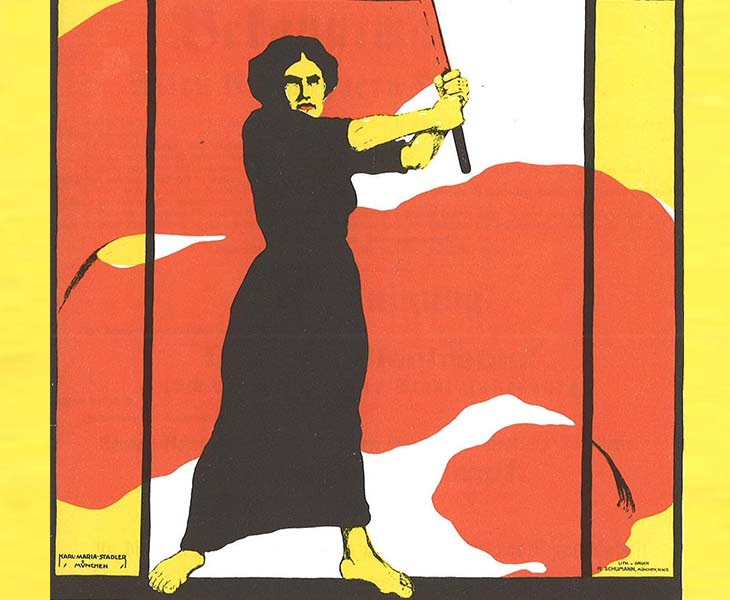
In 1911, over 1,000,000 women across 4 European countries rallied for International Women’s Day as well as took part in strikes for women’s rights, including the famous ‘Bread and Roses’ strike.
The power of a day!
And so, this annual day of celebration, activism, campaigning, has led to the uprising and emancipation of women across the world. It’s amazing to reflect on the advancements that have been made by one woman’s dream and many other women’s hope, passion and rage. However, we know this is not the case across all the world, many women still suffer harm, inequality, and oppression at the hands of the patriarchy.
So, what does this have to do with ADHD I hear you say! A tedious link you may think (oooh that rhymes)!
Even in western society, where women experience greater equality, equitable rights, and access to a (seemingly failing) welfare system, gender inequalities still exist!
There are currently approx. over 75,000 women in the UK who have undiagnosed ADHD and are likely to be experiencing some of the following:
- Have anxiety
- Have depression
- Have been misdiagnosed for both the above and other mental health conditions
- Are taking medications they shouldn’t be
- Have low self esteem
- Lack understanding of themselves
- Feel misunderstood and a failure
- Are more susceptible to bullying
- Use substances such as alcohol and drugs to manage symptoms and cope
- Self-harm
- Experience admissions to psychiatric inpatient units
- Pressured into sex
- Suffer sexual exploitation
- Unplanned teenage pregnancies and STIs
- Suffer intimate partner violence
- Fail to thrive in school, further education and work
- Are 18 times more likely to be convicted of a crime than the general population
- Have reduced life expectancy by up to 12.7 years through suicide and unnatural causes
What’s even worse, is that these women don’t need to experience many of these things and much could be prevented. The above list isn’t exhaustive but does demonstrate the consequences of undiagnosed ADHD in women. It is estimated that up to three-quarters of all women with attention-deficit/hyperactivity disorder (ADHD) are undiagnosed.
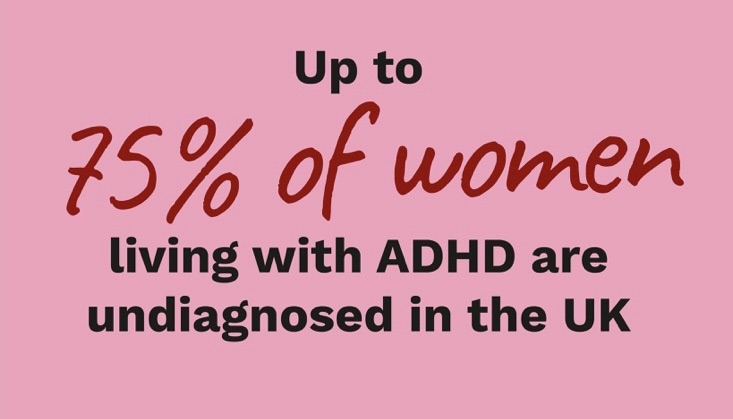
There’s an estimated 67 million people living in the UK of which approximately 51% are women (approx. 35 million). ADHD prevalence in the UK is estimated to be 3-4% with a male to female ratio (of those diagnosed) of between 2-5:1 according to the National Institute of Clinical Evidence (NICE) who also suggest that clinic populations show a ratio as high as 10:1.
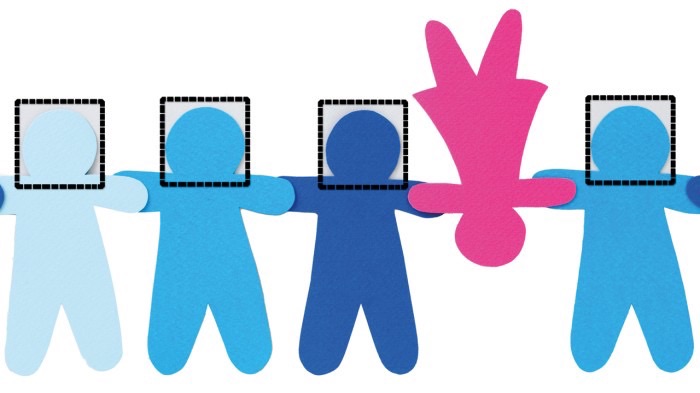
Women’s ADHD health inequalities are real, they are happening globally not just in the UK.
Women are not only struggling to access healthcare assessments and treatment for ADHD, but they are also struggling to have their voices heard, their symptoms assessed correctly, and their concerns taken seriously. They are experiencing public and professional bias daily at a significantly damaging rate.
Women’s Intersectionality and ADHD
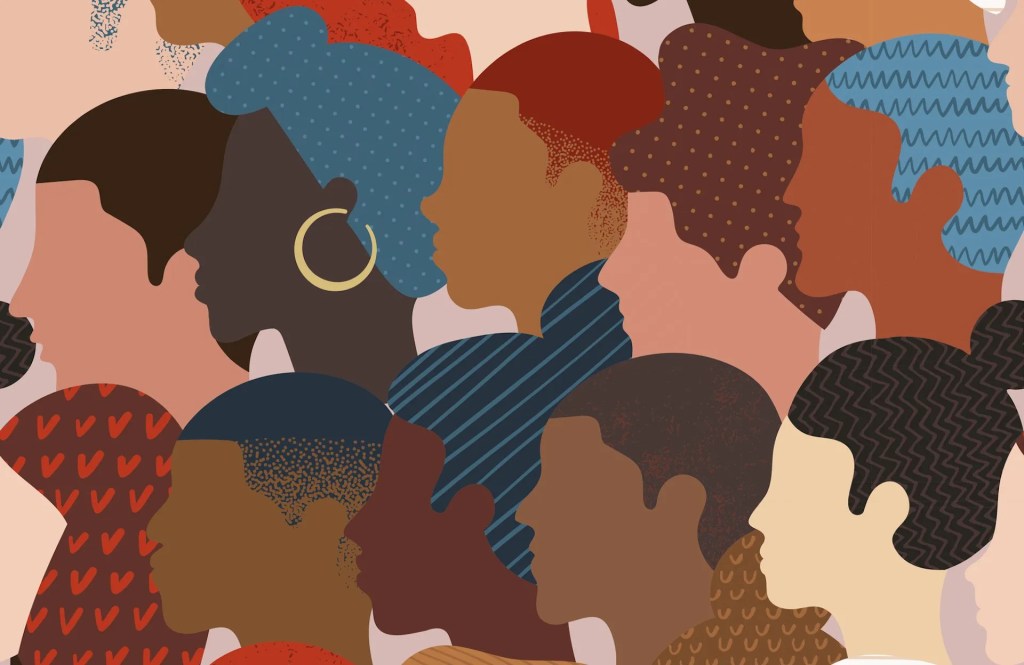
Furthermore, when we explore these inequalities through the lens of women’s intersectionality, it’s important to comprehend the added complexities that arise through social, cultural, ethnicity, disability, and age. Intersectionality and a woman’s wider determinants of health all impact on her ADHD being recognised, validated, and diagnosed.
Picture in your mind a person with ADHD, for many people this will be a white boy, usually seen as hyperactive. This is the challenge faced by girls and women and especially those of colour, or with a disability. ADHD remains a stereotypical ‘white male condition’. Yet data shows that more ‘Black British women had been screened positive for ADHD than White British women’. Why might that be:
Representation: Girls and women of colour, do not see themselves represented in the ADHD community, therefore may be less likely to identify with it. Also, many medical practitioners are still holding unconscious bias and stereotyping of what ADHD looks like, and therefore when these girls and women do present with their symptoms, they are less likely to consider ADHD, and more likely to be diagnosed with depression or anxiety.
Racism and Discrimination: Institutional racism ,discrimination and bias has long existed in our public services, we talk of hard-to-reach communities, yet it is often the case that it is our services which are hard to reach and access. Evidence shows that people of colour are often unable to access, are excluded or harmed by mental health services.
Cultural Factors: In some communities, mental health conditions and neurodevelopmental conditions are stigmatised. Preconceived judgements and unconscious bias can also add to the challenge. I read that in the US ‘children of colour are more likely to be suspended than their white peers and are five times more likely to report being expelled or suspended’. We know that children with ADHD are also more likely to be suspended and excluded from school, here in the UK. There appears to be a missed opportunity surely?!
Call to Action
On this March 8th (IWD) I want to create a call to action on behalf of those 75,000 women in the UK, and the millions of others across the world who are being disadvantaged through outdated assumptions and beliefs, outdated clinical assessment guidance and diagnostic criterion (DSM-5) and a severe lack of government funding.
Recent studies demonstrate that 72% of those with a diagnosis were boys. The study further suggests that current diagnostic criteria DSM-5 and clinical practise is biased towards male presentation of ADHD. Furthermore, that girls were prescribed non-ADHD medication such as anti-depressants at a higher rate than boys, and that they were also being diagnosed much later than boys, on average, 5 years later (boys at age 7, girls at age 12) . Many girls continue to be missed, undiagnosed or misdiagnosed in direct comparison with boys.
This is often due to ADHD in girls and women, not being recognised by the medical professionals, teachers, and parents. Additionally, the diagnostic criteria used for ADHD was developed to address behavioural challenges which presented in boys. Original referrals for ADHD assessment were from teachers of privileged white boys who exhibited behavioural challenges in the school setting. It was designed and remains most relevant for diagnosis of predominantly male symptoms of ADHD, despite more recent evidence demonstrating that presentation is different in girls.
Russell Barkley, suggests that although there are currently 18 criteria (9 inattentive type and 9 hyperactive/impulsive type) which make up the DSM – 5, his research of people with ADHD especially of women, shows 91 that are relevant. And that many of the symptoms which are experienced by girls and women are not listed in the 18.
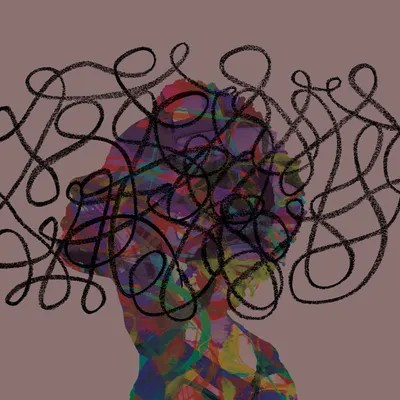
Why is a diagnosis so important for women?
- Gender based, societal norms, are a core part of our identity (rightly or wrongly). Any challenge to these can have a significant impact on how women and men experience theirselves, with many feeling a sense of guilt and failure.
- Self-awareness is a key and fundamental aspect of emotional intelligence, understanding ourselves leads to us being able to understand others and connect at a basic point of being human. Understanding ourselves can lead to hope, empowerment, and self-love. It helps us to make sense of our lives, our struggles, our passions, and how we show up as a person.
- Many people who are neurodiverse, often feel that they have to ‘mask’ and that they cannot be their authentic selves, they develop learned behaviours to enable them to fit into a neurotypical world. This is particularly common in girls with ADHD.
- More women and girls are prescribed antidepressant medication before being treated for ADHD compared to boys, a recent study showed 40% of girls compared to only 5% of boys. This means that our daughters are being prescribed medication they don’t need and are not being accurately treated for the primary condition – ADHD!
- Women are more likely to be diagnosed with anxiety or depression as a primary diagnosis and they often experience greater emotional dysregulation compared to men which can go on to have a profound impact on their life and relationships.
- Women with undiagnosed ADHD are more likely to use alcohol and drugs and in 20 to 39-year-old women, this is twice as prevalent.
- Women with undiagnosed ADHD or more likely to experience chronic pain, generalised anxiety disorder and suicidal ideations compared to women without ADHD.
Diagnosis and early intervention are vital. If you have daughters, or work with girls, be aware of the different presentation of ADHD and challenge assumptions and outdated beliefs about how this shows up. If you have any thoughts that ADHD may be something they are experiencing symptoms of, seek out advice, support and assessment if required, and don’t be dismissed, advocate and where required, battle for equality of access and treatment.
As a woman diagnosed with ADHD in her 40s, having grown up undiagnosed , yet in hindsight experienced both inattentive and hyperactive/impulsive traits throughout my childhood, I wish that I had been aware and understood the differences in my neurobiology as I developed into womanhood.
Living with undiagnosed ADHD has had an impact on my life and it has been evidenced to significantly impact on a woman’s social and emotional well-being. Women and girls are much more likely to ‘mask’ and they are more likely to experience significant difficulties in various aspects of their lives including:
- self-esteem
- peer relations and emotional control
- profound impact on self-worth.
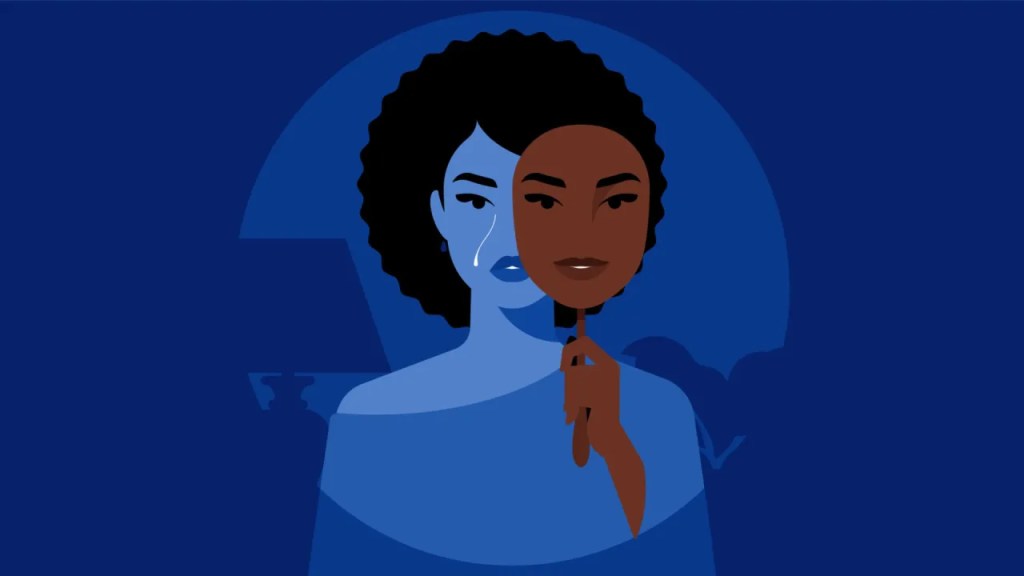
A study by Attoe & Climie (2023) concluded, women with undiagnosed ADHD experienced feelings of being a ‘bad person’, feeling misunderstood, self-blame, rejection, shame, and guilt. Sadly, I can relate to all of those. The study also suggests that a lack of diagnosis and ultimately an understanding of ‘self’ can often have a significant impact on the areas below:
Social relations and emotional control: Women with undiagnosed ADHD had significant difficulties in social relations, emotional control, and identity formation. It also references women with undiagnosed ADHD feeling ‘different’ and alienated in childhood. I can absolutely relate to this, feeling on the peripheries of friendship groups. Many women also expressed feeling peer rejection, and being bullied which can lead to sadness, loneliness, and a sense of rejection for not ‘fitting in’, but most importantly not understanding why they don’t. Feeling misunderstood, which can often show up as anger (a secondary emotion or symptom of something else) and emotional dysregulation. Emotional dysregulation is common and not just in women, it can be linked to Rejection Sensitive Dysphoria (RSJ) which is an often overlooked and under researched symptom.
These experiences for young girls, often remain into womanhood and can have a huge impact, especially if women are not aware of the reasons for them and can result in:
- Missed opportunities
- feeling different
- feeling alienated
- feeling awkward
- loneliness
- emotional dysregulation including anger difficulty in controlling emotional responses
- Regret
It’s also suggested that women are more likely to use coping strategies to manage their undiagnosed ADHD, which are emotionally orientated such as the use of recreational drugs, alcohol etc
Difficult Relationships: A common theme for women who took part in these studies, suggest that the impact of undiagnosed (and sometimes after diagnosis) can impact relationships with family and friends, including family relationships and romantic relationships. In particular in the studies, women described difficult childhoods and a sense of not feeling ‘unconditionally accepted‘ by their families. In romantic relationships, these women expressed a sense of not being able to fully express themselves or feel understood, feeling unsupported. Challenges with being seen as ‘overreactive’ or ‘high maintenance’ due to emotional dysregulation and not feeling emotionally validated or wholeheartedly accepted for who they are, loved even more on their ‘bad days’, instead feeling judged or criticised.

Low Self Esteem: Having undiagnosed ADHD can have a huge negative impact on self-esteem. Growing up with a sense of ‘being bad’, ‘not fitting in’ ‘inadequate’ and different. Young girls with ADHD are growing up believing themselves to be to blame, feeling rejected socially and misunderstood. Feeling like a failure compared to peers, feeling unloved and different. Not being able to live up to the societal expectations placed on them at such a young age.
This worries me immensely, with the rise of social media usage, unhelpful and often unrealistic images and narratives and societal pressures of what and how a girl should be is further damaging to a group of young girls who are already vulnerable.
The study also demonstrated what I know to be true, which is the importance of self-acceptance after diagnosis. This helps to offer an explanation, often for a life lived up to that point. It helps to relieve shame and feelings of guilt about who you are and who you’ve been, and how you have shown up in the world. It enables the start of what can be a difficult journey of acceptance and adjustment, until hopefully we begin to flourish and thrive as our authentic selves.
I think my blog for March, wouldn’t be complete without highlighting again some of the signs and symptoms of ADHD in girls and women which are often overlooked and overshadowed by what we traditionally view as ADHD, as loud, naughty, hyperactive boys. Girls and women tend to have more internalised symptoms of ADHD and therefore it often gets misdiagnosed.
If our current model is that diagnosis requires more hyperactive and obvious symptoms, then this means that girls and women who have undiagnosed ADHD are likely to have symptoms which impact more significantly on their lives than males. Therefore women and girl’s are much more likely to be impacted negatively and more significantly by their ADHD before a diagnosis is given.
An article by Prof Amanda Kirby (who recently gave a talk on one of my ADHD Coaching Workshops) on the ADHD Foundation Website gives a list of some ADHD signs and their impact for females:
- Starting something and not finishing it and then feeling bad because of this
- Working much harder to achieve because not sure of how hard you need to work … burn out cycles
- Chatty, enthusiastic, overly engaged ( and then not!)
- Losing your day drifting off down a rabbit hole of interest- seen sometimes as ‘daydreaming’.
- Distracted by other people’s conversations around you and drifting off when talking to someone – unless the topic is of high interest and then fully engaged.
- Impulsive (enthusiastic) decision making – saying yes before saying no and then regretting it because of too many yes’s
- Not being able to sit still/stay quiet for long/fidgety/toe-tapping/doodling/hair twirling
- Sleep disturbance, busy brain, and rumination and feelings of disappointment when it hasn’t gone right (again). Feeling anxious.
- Losing possessions even though you are sure you put them in one place, disorganised.
- Loads of information/knowledge… but a brain that has an inconsistent filing system
- Poorer concepts of time passing
- Other people’s perceptions of you – thinking that you are less capable than you really are or overly direct or rude because of interrupting ( I often find it hard to stay quiet for long!).
- Compensating to camouflage by working even harder to cover up mistakes /driving anxiety and obsessional actions to do so- putting the pressure on yourself
- Prevarication ends up with you doing the things you like doing and avoiding the tedious things we still all have to do as much as possible even though we know they often won’t take us long in reality.
- The impact for females may result in having greater social problems in school and it may result in having been more vulnerable to bullying, including physical and social-relational bullying, and cyberbullying.
- Like males, there is an increased school dropout, academic under-achievement, and more accidents with females. Not surprisingly there is an impact on self-esteem and self-concept
Whilst I believe that ‘toxic positivity’ of ADHD being a ‘super-power’ is harmful, minimises reality, and denies the reality for people living with ADHD. I would like to conclude this blog by talking about the benefits. Being a woman with ADHD and importantly being still on that journey to owning it, I want to recognise the fact that I’ve not only succeeded in spite of it, but I have thrived because of it.
I can honestly say that reflecting on my adult life, most of the positive things that have happened to me, are because of having ADHD. Although I can’t evidence it, I do wonder had I been born a neurotypical person, if I would be sat here now reflecting differently, and if I might feel like I’d lived a half-experienced life. I can honestly say that even at 44 years old I’ve taken most opportunities that have come my way and I think taken more risks to live a fulfilling life than possibly others.
One of the things I’m particularly proud of is allowing myself to follow ‘head and heart’ in leaving the comfort zone of employment, and establishing at the age of 35 (with a 6 and 4 year old child, and being the main source of income) what I would now consider to be a successful and credible organisation which has expanded and sustained the last nine years despite difficulties such as a global pandemic .
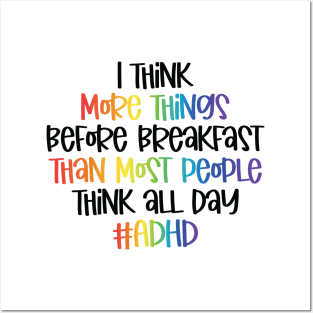
Entrepreneurialism is seen frequently in people with ADHD, it makes sense, we are creative, innovative, risk-taking people who probably have more thoughts before breakfast than the average person does in a day. Many of the top companies such as google, Microsoft etc actively recruit people who are neurodiverse, they know the difference and value the rich diversity of thinking adds to the company in terms of market position and bottom-line. Neurodiversity is good for business.
If we couple this with reports such as the Mckinseys series of ‘Women in Work’ annual reports which have evidenced time and again that in companies where women are most strongly represented in board or top management level roles, these companies perform the best.
If we can reduce the inequalities in ADHD diagnosis and treatment for girls and women and help them to become more self-aware, understand their strengths, and create a society where both neurodiversity and women can thrive, then the value added to society will surely make the world a better place!
So, what I am hoping for, is greater awareness and promotion of what ADHD looks like in girls and women, for all those girls struggling currently to be recognised and to have a diagnosis which will help them to make sense of themselves and the world in which they live. And for women like me, who have been diagnosed later in life, to find some peace and self-forgiveness for a life of blame, feeling inadequate and misunderstood, and to recognise the beauty in which ADHD presents. To unmask, embrace, and feel empowered.
If you do one thing today for IWD24, spread the word somehow, anyhow, raise awareness of ADHD in girls and women.
We are still as women, fighting for an illness. To have equity and equality to access healthcare and to raise awareness, so that women have as many opportunities as men do to accept themselves, get the right support and to thrive and be all they can be.
Happy IWD 2024
Kirstie x


Leave a Reply